
From Reactive to Proactive Care: Turning the Aged Care Bed into an Intelligent Safety Platform
RFBI partnered with Micromax on a 12-month trial of the Cognito Health Smart Mattress Cover at RFBI Basin View, turning everyday beds into smart care platforms for safer, proactive and data-informed care.
Book a demo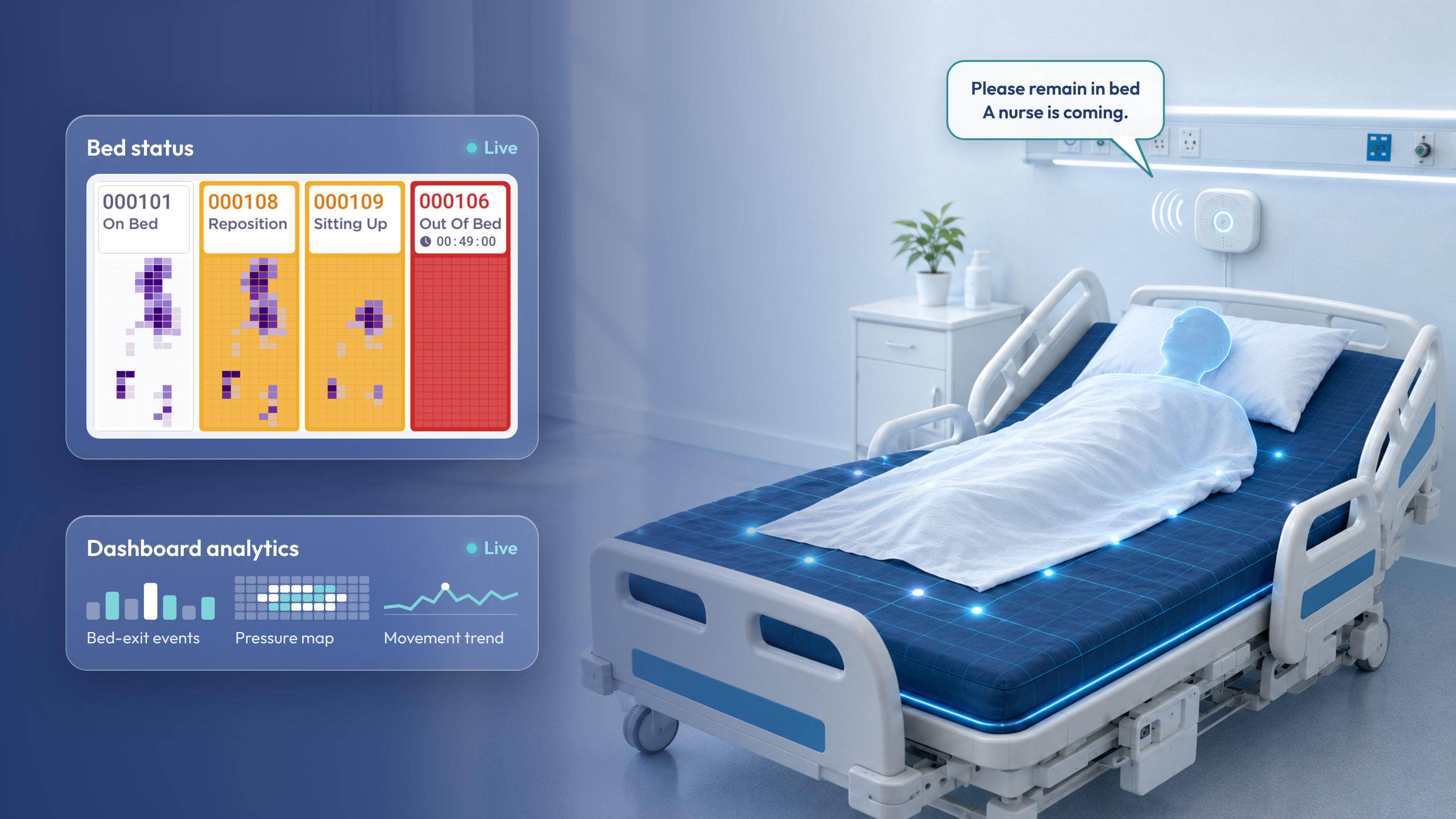
The Challenge
Falls and pressure injuries remain significant challenges in residential aged care. At the same time, workforce pressures mean providers need new ways to improve resident safety without adding to the workload of their care teams.
RFBI wanted to know whether technology embedded unobtrusively into an existing bed could give staff earlier, actionable information, and support a shift from reactive intervention to proactive care.
Our Solution
Micromax and RFBI undertook a 12-month trial of the TGA-approved Cognito Health Smart Mattress Cover across 10 standard single beds at RFBI Basin View in NSW.
The cover converts an existing mattress into a continuously monitored smart bed. Residents don't need to wear or interact with a device. It monitors movement and bed activity around the clock and provides:
- Predictive bed-exit notifications
- Pressure mapping and repositioning information
- Real-time alerts to care staff
- Longitudinal resident activity data
Turning Data into Care Insights
Continuous bed data is only useful if staff can act on it. Micromax developed supporting operational reporting that extends the system beyond real-time alerts.
Overnight summaries and longer-term resident reports highlight bed exits, sitting-up events, repositioning activity, time on and off the bed, and deviations from each resident's own historical patterns. Unusual activity and emerging trends are flagged for staff attention, so care teams don't have to interpret large volumes of raw data.
The Outcome
The trial gave RFBI the opportunity to evaluate the technology in a real residential aged care environment: how it operated, how staff interacted with it, and how continuous bed data could be translated into information useful for care delivery. It showed that the technology functions reliably and consistently.
RFBI's experience shows how an everyday piece of aged care infrastructure, the bed, can become a source of meaningful, actionable information:
- Predictive alerts support earlier intervention for residents at risk of unassisted bed exit
- Pressure and repositioning information supports pressure-injury prevention strategies
- Longitudinal data enables more individualised care planning
- Better-informed clinical and operational decision-making
What's Next
With reliability established, the next phase will demonstrate the system's capability to do what it was designed for:
- Prevent falls by alerting nursing staff when a resident sits up, as the first call to action, and again when they are leaving or have left the bed, both overnight and during the day for bed-bound residents
- Minimise and prevent pressure injuries
- Introduce vital signs monitoring for an additional level of health monitoring and care response